
Does the Life in the UK Test Expire?
No, the Life in the UK Test does not normally expire once you have passed it. If you pass the test, you can usually use the result later for your Indefinite Leave to Remain, settlement, or British citizenship application. However, immigration rules can change, so you should always check the latest official guidance on GOV.UK before submitting your application.
Many candidates ask this question because they pass the test before they are ready to apply for ILR or citizenship. The good news is that your Life in the UK Test pass is generally treated as valid for future eligible applications.
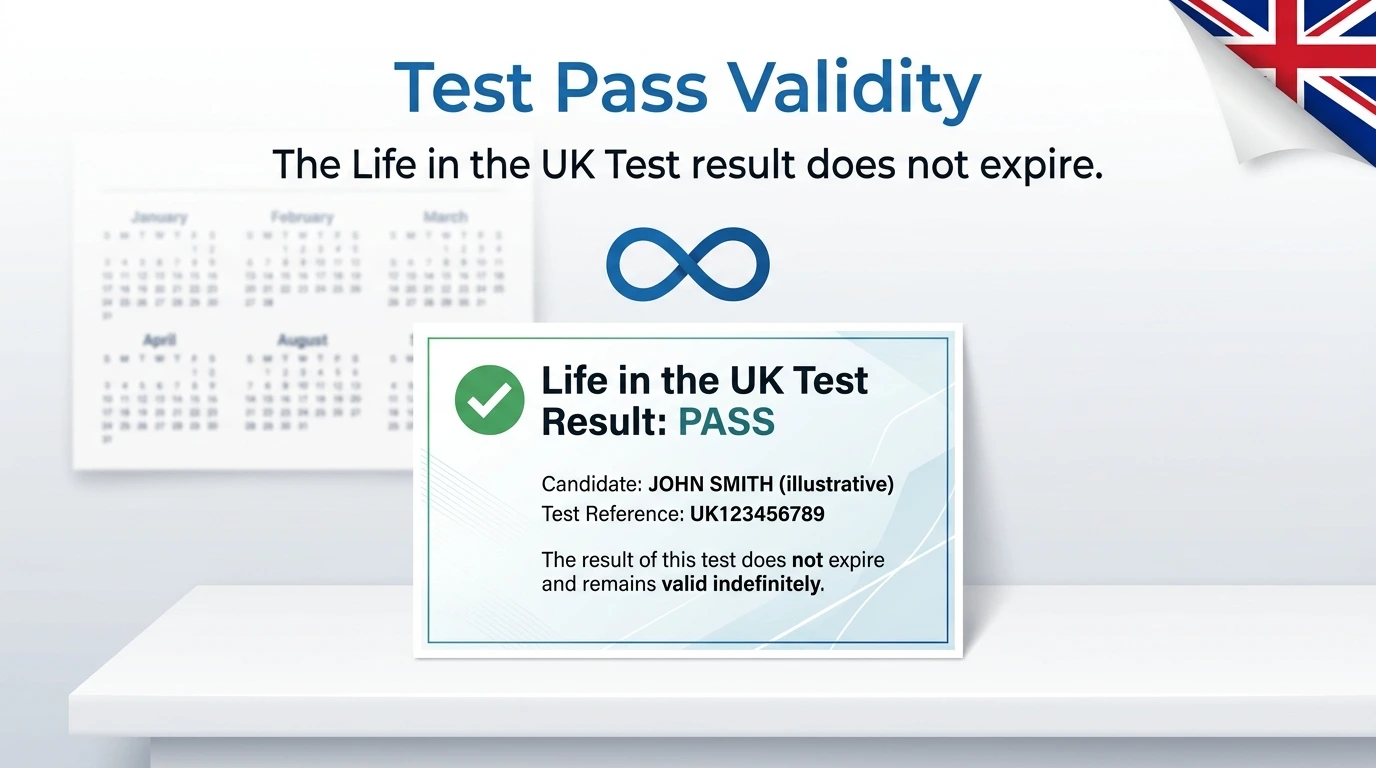
The Life in the UK Test pass result does not normally expire. Once you pass, you can usually use the same pass result for an ILR, settlement, or British citizenship application. Keep your pass reference safe and always confirm current application rules on the official GOV.UK website before applying.

Prepare Before You Book Your Test
Before booking the official exam, it is a good idea to practise properly with realistic questions. You can start with our Life in the UK Test practice resources or try a Life in the UK mock test to check your preparation level before paying for the official test.
What Is the Life in the UK Test?
The Life in the UK Test is a computer-based test that checks your knowledge of British history, government, laws, values, traditions, and everyday life in the United Kingdom.
It is usually required if you are applying for:
Indefinite Leave to Remain
Settlement in the UK
British citizenship
Naturalisation as a British citizen
The test is part of the UK immigration process and is designed to show that applicants understand life in the UK. According to official GOV.UK guidance, the Life in the UK Test is required for citizenship or settlement, and candidates must book it through the official service.
The official test contains 24 multiple-choice questions, and you usually need to answer at least 18 questions correctly to pass. The test is taken at an approved test centre and must be booked using the official process.
How Long Is the Life in the UK Test Valid?
Your Life in the UK Test result is generally valid indefinitely after you pass. This means you do not usually need to take the test again if you passed it in the past and later apply for ILR or British citizenship.
For example, if you passed the test while preparing for ILR but did not apply immediately, you can usually use the same pass result later. Similarly, if you used your pass result for ILR, you may normally use it again when applying for British citizenship.
This is why many candidates choose to take the test early. Passing in advance can reduce stress when the time comes to submit your immigration application.
However, you should remember one important point: immigration rules can change. Before using an older pass result, always check your latest application requirements on GOV.UK or speak to a qualified immigration adviser.
Can I Use the Same Life in the UK Test for ILR and Citizenship?
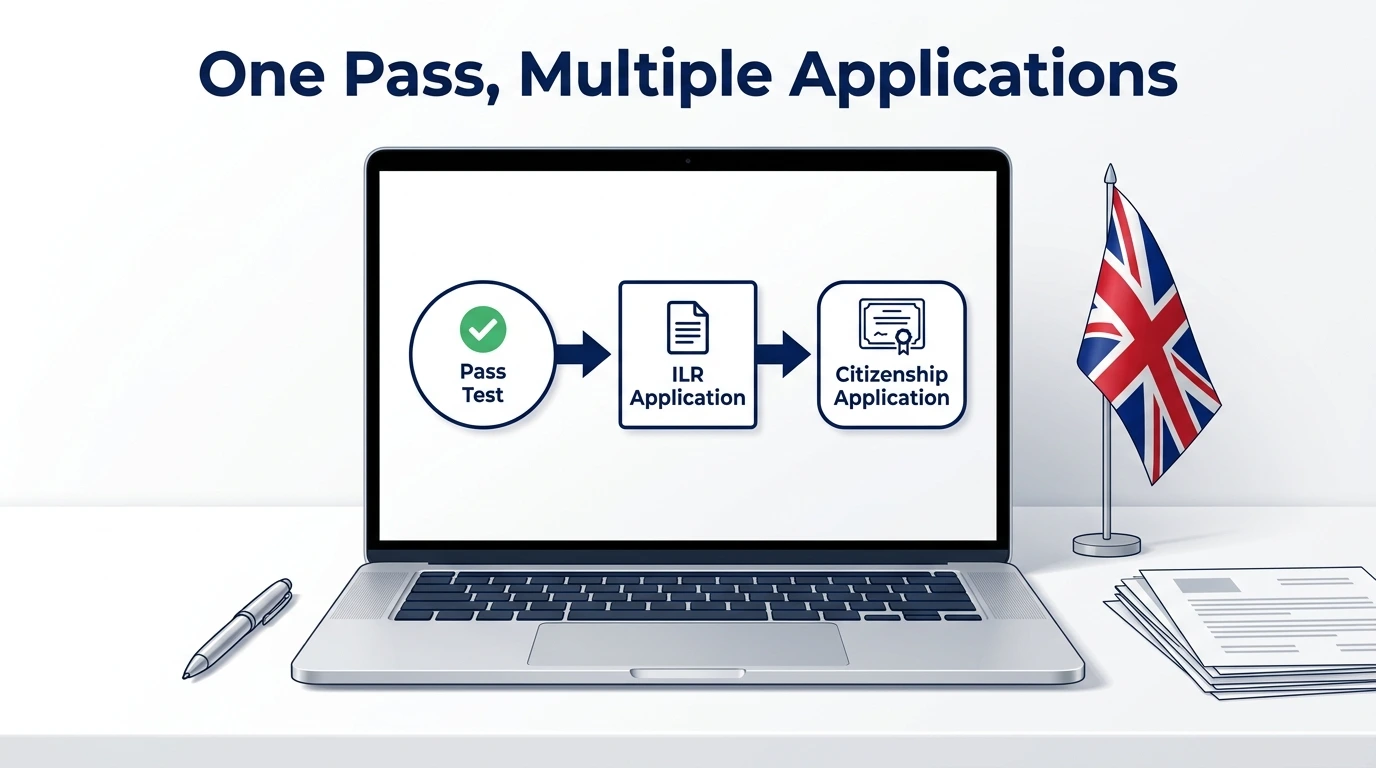
Yes, in most cases, you can use the same Life in the UK Test pass result for both ILR and British citizenship.
For example:
You pass the Life in the UK Test.
You use the result for your ILR application.
Later, you apply for British citizenship.
You can usually use the same Life in the UK Test pass again.
This is helpful because you do not normally need to pay for and sit the test twice.
However, you must keep your pass details safe. When applying for ILR or citizenship, you may need to provide details from your Life in the UK Test pass result. If you lose your details, it may create problems or delays during your application.
To prepare properly before your first attempt, use sample Life in the UK Test questions and revise with a clear Life in the UK Test study guide.
Do You Need to Retake the Life in the UK Test?
In most cases, you do not need to retake the Life in the UK Test if you have already passed it.
You may only need to take action again if:
You did not pass the test.
You lost your pass details and cannot recover them.
Your application requirements have changed.
GOV.UK guidance changes in the future.
You took a different test that does not meet the requirement.
If you failed the test, you can book another attempt. There is usually no limit on how many times you can retake it, but you must pay the fee each time and book a new appointment through the official GOV.UK service.
That is why preparation is important. Before booking again, practise with Life in the UK Test questions and answers so you can understand the format and improve your confidence.
What Should You Do After Passing the Life in the UK Test?
After passing the test, you should keep your pass information safe. Do not delete emails or documents related to your test result.
Here are a few practical steps:
1. Save your pass reference
Keep your Life in the UK Test pass reference in more than one place. You can save it in your email, cloud storage, and a private document folder.
2. Check your personal details
Make sure your name, date of birth, and ID details are correct. Your immigration application details should match your identity documents.
3. Keep your ID documents safe
You must use correct identity documents when booking and attending the test. If your passport or ID changes later, check how this may affect your application.
4. Check the latest GOV.UK rules
Before applying for ILR or British citizenship, check the official guidance. Your test result may not expire, but immigration requirements can still change.
5. Continue preparing your application
Passing the test is only one part of the process. You may also need to meet English language requirements, residency requirements, good character requirements, and other immigration conditions.
Can You Take the Life in the UK Test Early?
Yes, you can usually take the Life in the UK Test before you are ready to apply for ILR or citizenship. Many people do this because the pass result does not normally expire.
Taking it early can be useful because:
You have more time to prepare.
You can avoid last-minute stress.
You can focus on other parts of your application later.
You can retake it if you fail the first time.
You can plan your immigration application more confidently.
However, do not rush the test without preparation. Even though the questions are multiple choice, the test can be challenging if you have not studied the official topics properly.
A smart approach is to study first, then practise with mock exams, and only book the official test when you are consistently getting passing scores.
How to Prepare Before Taking the Life in the UK Test?
Because the test fee is non-refundable in many situations, you should prepare carefully before booking your appointment.
Here is a simple preparation plan:
Step 1: Understand the test format
The test has 24 multiple-choice questions and is completed on a computer. You should become familiar with the style of questions before your official test day.
Step 2: Study the official topics
The test covers British values, history, government, law, society, and traditions. Use a proper revision guide to understand the key areas.
Step 3: Practise topic by topic
Start with individual practice questions before taking full mock tests. This helps you identify weak areas.
Step 4: Take mock tests
Once you understand the topics, take mock exams under timed conditions. This helps you build speed and confidence.
Step 5: Review your mistakes
Do not just check your score. Review wrong answers and revise those topics again.
You can begin with our Life in the UK Test preparation resources and then take a Life in the UK Test mock exam when you feel ready.
When Should You Book the Official Test?
You should book the official test when you feel confident and your mock test scores are consistently above the pass mark.
Avoid booking too early if you are still guessing many answers. A better strategy is to practise first, improve your score, and then book the test through the official GOV.UK website.
You should also leave enough time before your ILR or citizenship application deadline. This gives you time to retake the test if needed.
For booking information, read our Life in the UK Test booking guide and always confirm the official process on GOV.UK.
Is the Life in the UK Test Required for ILR?
In many cases, yes. The Life in the UK Test is commonly required for people applying for Indefinite Leave to Remain or settlement in the UK.
However, some people may be exempt depending on age, medical conditions, or specific immigration categories. Because exemptions can depend on your personal situation, you should check the latest official guidance before applying.
If you are preparing for ILR, it is better to pass the test early and keep your pass details safe. This can make the final application process easier.
Is the Life in the UK Test Required for British Citizenship?
Yes, many people applying for British citizenship or naturalisation need to prove knowledge of life in the UK. The Life in the UK Test is one of the key parts of this requirement.
If you already passed the test for ILR, you usually do not need to pass it again for citizenship. You can normally use the same result, as long as it meets the current application requirements.
For citizenship-related preparation, you may also find our British citizenship test guide helpful.
Common Mistakes Candidates Make
Many candidates make small mistakes that can create stress later. Avoid these common issues:
Not saving the pass reference
Your result is important. Keep a copy of your pass details in a safe place.
Booking through unofficial websites
Always use the official GOV.UK service for booking. Third-party websites may charge extra or provide misleading information.
Taking the test without enough practice
The test may look simple, but many questions require proper revision.
Ignoring updated rules
Even if your test result does not expire, application rules can change. Always check the latest official requirements.
Waiting until the last minute
If you delay the test and fail, your application timeline may be affected. Give yourself enough time to prepare and retake if needed.
Final Answer: Does the Life in the UK Test Expire?
So, does life in the UK test expire? In most cases, no. Once you pass the Life in the UK Test, your pass result does not normally expire. You can usually use it later for ILR, settlement, or British citizenship.
The most important thing is to keep your pass details safe and check the latest official GOV.UK guidance before applying. The test result may remain valid, but immigration rules and application requirements can change.
Before booking the official test, prepare properly with Life in the UK Test practice, revise the key topics, and take a Life in the UK mock test to check your readiness.
FAQs
1. Does the Life in the UK Test expire?
No, the Life in the UK Test pass result does not normally expire. Once you pass, you can usually use the same result for ILR, settlement, or British citizenship.
2. How long is the Life in the UK Test valid?
The Life in the UK Test is generally valid indefinitely after you pass. However, you should always check the latest GOV.UK guidance before applying.
3. Can I use the same Life in the UK Test for citizenship?
Yes, if you already passed the Life in the UK Test for ILR, you can usually use the same pass result for your British citizenship application.
4. Do I need to retake the Life in the UK Test for ILR?
If you have already passed the test, you usually do not need to retake it for ILR. You may need your pass details when applying.
5. What happens if I lose my Life in the UK Test pass details?
If you lose your pass details, check your emails and documents first. You may need to contact the official test provider or follow GOV.UK guidance for help.
6. Can I take the Life in the UK Test before applying for ILR?
Yes, many candidates take the test before they are ready to apply for ILR because the pass result does not normally expire.
7. Should I practise before booking the Life in the UK Test?
Yes. Practising before booking can help you understand the question format, improve your score, and reduce the risk of paying for another attempt.